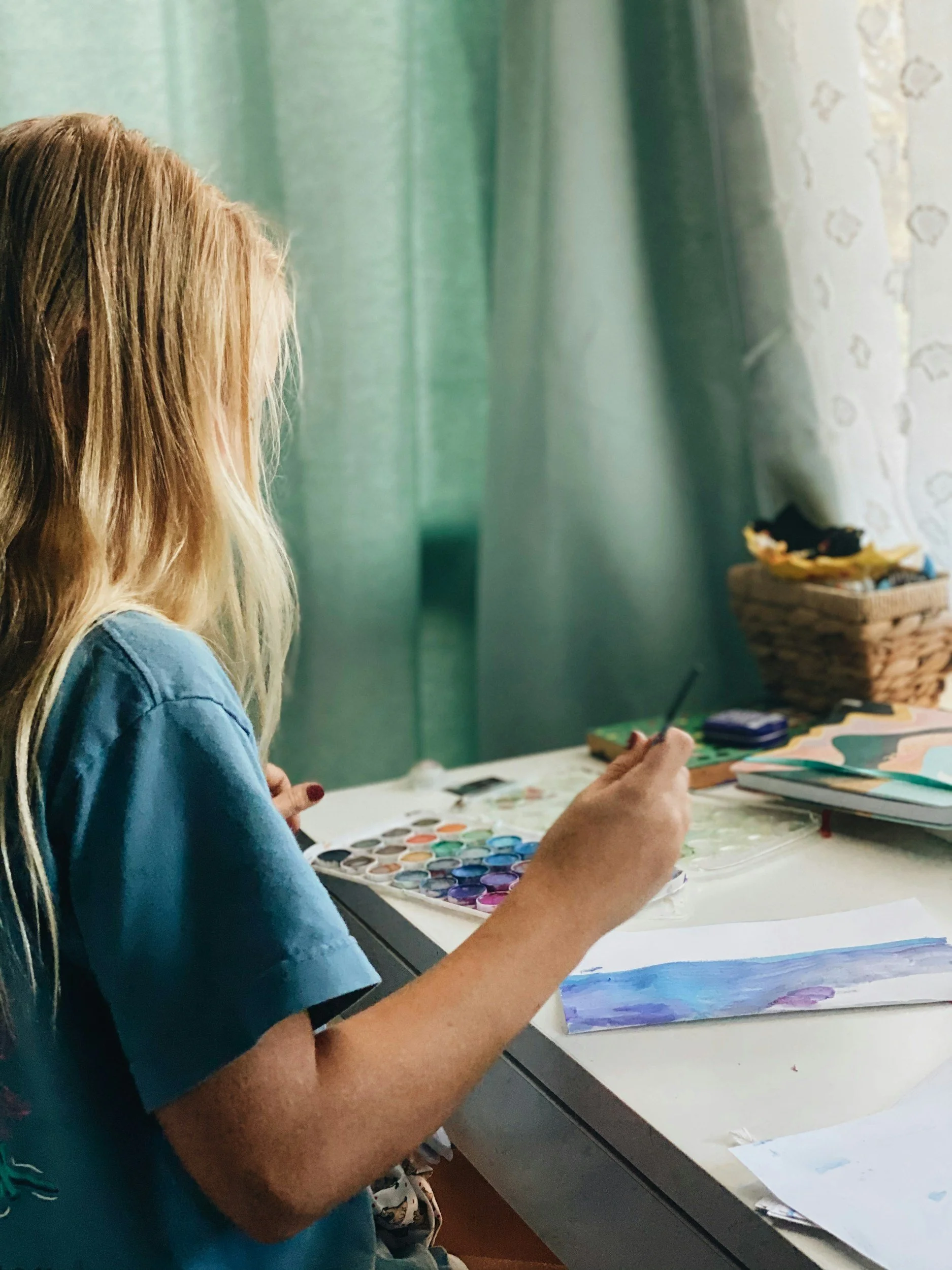
“I found I could say things with colour and shapes that I couldn’t say any other way - things I had no words for.”
Georgia O’Keeffe
Before training as a psychotherapist, I worked for many years supporting children, young people and families. Working with a diverse range of children and teenagers for so long has allowed me the very privileged position of watching how these wonderful young people’s creativity, resilience, and unique ways of being grow, while also observing how life experiences quietly knock their confidence or change their natural way of being and sense of self.
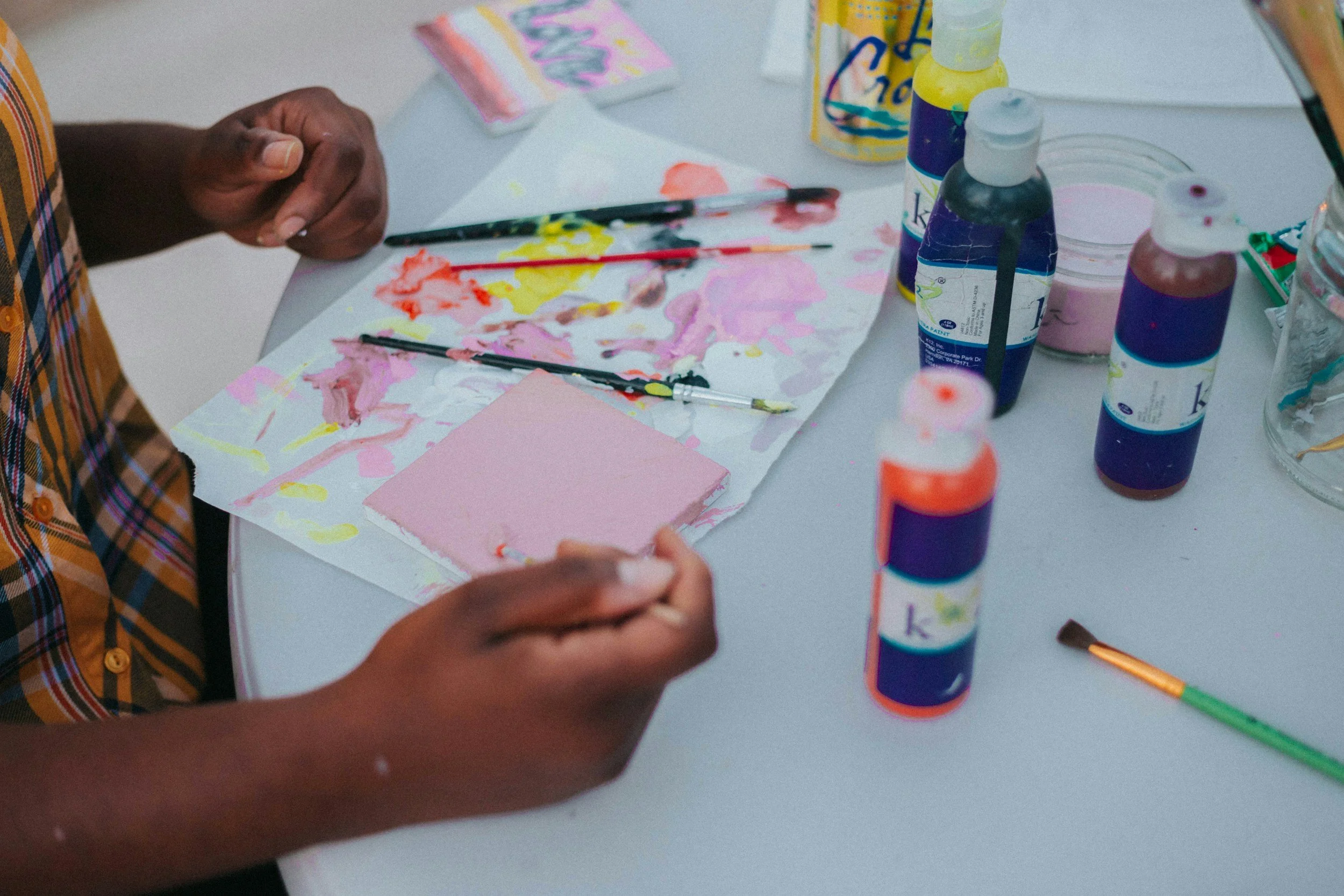
Using creative materials and play-based methods like drawing, painting or sandtray, children can show feelings and memories that they may not yet have the words for. The artwork and play become a bridge: they can reveal worries, make sense of confusing events, help process loss or change, and provide a safe space for exploration and healing. Sessions are tailored to each child’s needs and pace, supporting emotional expression, co-regulation between the therapist and the child, and creating resilience and a renewed sense of agency.
Art therapy can be a gentle and effective way to support children who are struggling. It’s especially helpful when difficult experiences such as parental separation, bereavement, trauma, bullying, or the arrival of a new sibling are affecting a child’s mood, behaviour or sense of safety. It is also recommended for children experiencing longer-term difficulties at school or home, such as specific learning needs, ADHD, chronic illness, relationship challenges, low self-esteem, or depression.